

Marketing Ideas for Boutique Accounting Firms: What Works Without a Full Marketing Department
By Siva Cotipalli · Published
Boutique accounting firms often have limited time and resources to manage marketing alongside client responsibilities. However, a focused approach can help them improve visibility and attract relevant enquiries without maintaining a full marketing department. This article explores ten practical marketing ideas, including referral networks, professional partnerships, Google Business Profile optimisation, local SEO, niche positioning, educational content, LinkedIn, and email newsletters. It also explains how firms can prioritise their online presence, communicate their expertise, and measure meaningful enquiries. By concentrating on relevant marketing efforts and maintaining consistent communication, smaller accounting practices can strengthen their reputation and support sustainable business growth.
Siva Cotipalli
November 4, 2026
Marketing Ideas for Boutique Accounting Firms: What Works Without a Full Marketing Department
TL;DR: Boutique accounting firms can attract the right clients without maintaining a full marketing department. Building referral relationships, improving local search visibility, communicating a clear specialisation, and sharing useful financial insights are practical ways to strengthen their presence and generate enquiries.
Introduction
Running a boutique accounting firm involves more than managing financial records, preparing tax returns, and advising clients. Firm owners also need to attract new business, maintain client relationships, and establish a reputation in a competitive professional services market.
However, marketing can become difficult when a firm has a small team and no dedicated marketing department. Managing partners and accountants often have to balance client work with business development, leaving limited time to plan campaigns, create content, or maintain an online presence.
The solution is not necessarily to do more marketing. It is to focus on the right marketing ideas for accounting firms and communicate consistently with the people they want to reach.
From building referral relationships to improving local search visibility, boutique accounting firms can use practical marketing approaches to become more visible, demonstrate their expertise, and attract relevant enquiries without adding unnecessary complexity.
What Is a Boutique Accounting Firm, and Why Does It Need Marketing?
A boutique accounting firm is a smaller, specialised practice that provides accounting, tax, bookkeeping, financial advisory, or related services to a particular type of client or business.
Unlike larger accounting organisations, boutique firms often operate with smaller teams and a more focused service offering. They may work with small businesses, startups, independent professionals, family-owned companies, or clients in specific industries.
Their smaller size can be an advantage. They can offer specialised knowledge, closer client relationships, and services tailored to particular business needs. However, potential clients need to understand what makes the firm different before they can consider working with it.
This is where marketing becomes important.
A firm may have strong accounting expertise, but that expertise does not automatically translate into visibility. Potential clients need ways to discover the firm, understand its services, and develop confidence in its ability to help them.
Effective marketing helps communicate that value. It also makes it easier for prospective clients to recognise whether the firm understands their financial challenges and offers the services they need.
10 Marketing Ideas for Boutique Accounting Firms
Marketing does not need to involve complicated campaigns or a large budget. The following ideas can help smaller accounting practices improve their visibility, communicate their expertise, and build stronger relationships with prospective clients.
1. Build a Consistent Referral Network
Referrals are valuable for accounting firms because clients and professional contacts can introduce the firm to people who may already need its services.
Instead of relying only on occasional recommendations, firms can build relationships with professionals who serve similar audiences. These may include business consultants, attorneys, financial advisors, payroll providers, and business coaches.
For example, a business consultant working with small companies may encounter clients who need bookkeeping or tax support. A professional relationship can create an opportunity for both parties to refer suitable clients when appropriate.
The important part is to make the referral process clear. Explain the services the firm provides, the types of clients it works best with, and the problems it can help solve. Maintaining regular professional relationships makes referrals more consistent and easier to manage.
2. Develop Partnerships With Complementary Professionals

Partnerships can help boutique accounting firms reach audiences beyond their existing client base.
Professionals who work with the same business owners often encounter related financial needs. For example, an attorney helping someone establish a business may know that the client also needs accounting support. Similarly, a financial advisor may work with individuals or business owners who require tax planning services.
Firms can develop these relationships through professional networking, industry events, educational sessions, and regular communication.
The objective is not to turn every professional connection into a sales opportunity. It is to build relationships where both parties understand each other's expertise and can make relevant introductions when a client needs additional support.
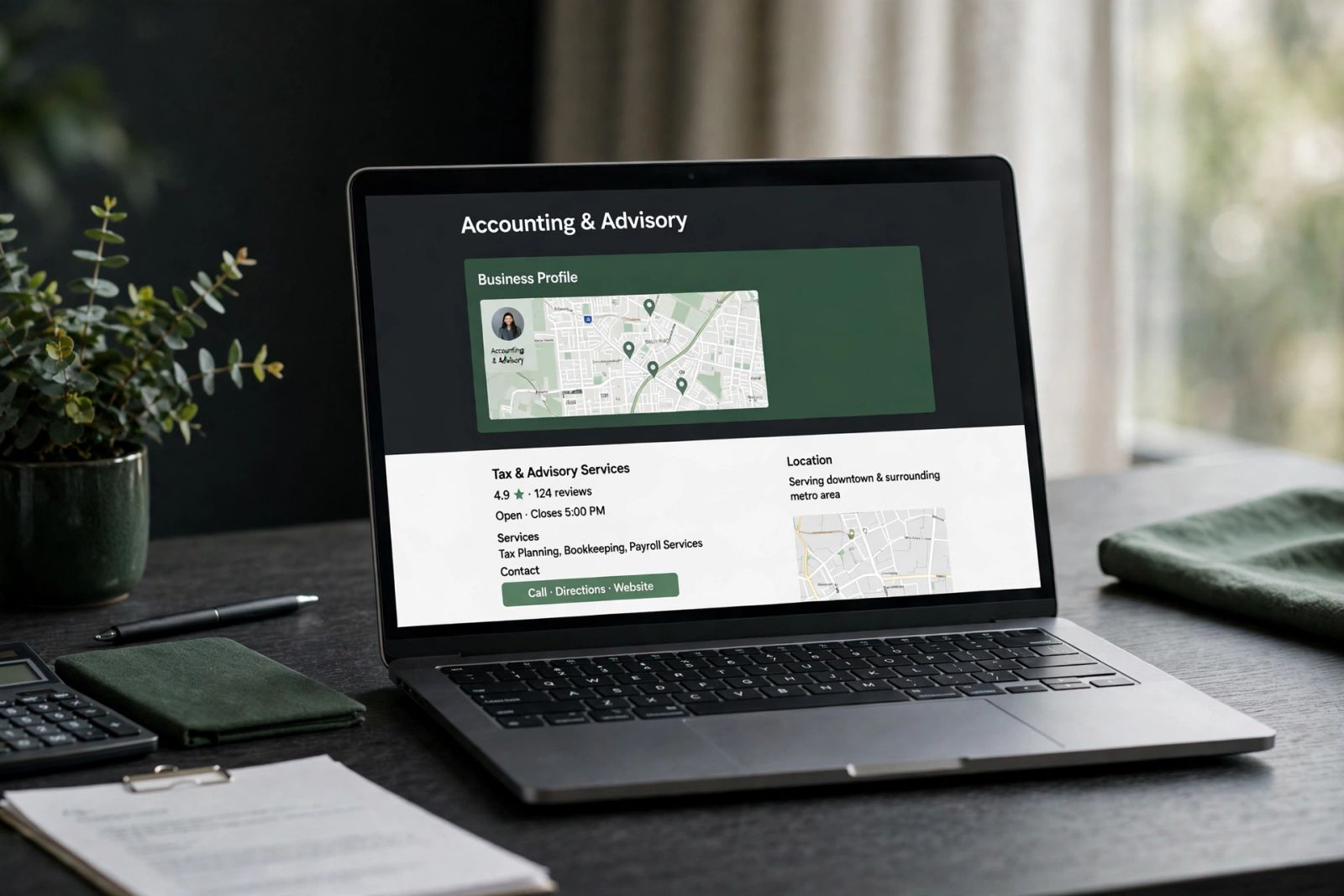
3. Optimise the Google Business Profile
A Google Business Profile helps accounting firms appear in relevant Google Search and Maps results. It gives potential clients access to important information, including the firm's location, contact details, website, services, and reviews.
A complete and accurate profile makes it easier for people to understand what the firm offers and how to contact it.
Firms should keep their business name, address, phone number, opening hours, and website information up to date. They should also select appropriate business categories, describe their services clearly, and add professional photographs where relevant.
Client reviews can also support credibility. Firms should invite genuine feedback from clients without pressuring them or offering incentives in exchange for positive reviews.
A well-maintained profile does not guarantee higher rankings, but it gives prospective clients a more useful and reliable first impression.
4. Improve the Firm's Local SEO
Local search engine optimisation helps accounting firms become more discoverable when potential clients search for accounting services in a particular area.
People may search for phrases such as "small business accountant in Chicago" or "tax preparation services near me." A firm's website should clearly communicate the locations it serves and the services it provides.
This can include creating useful service pages, mentioning relevant locations naturally, and ensuring that contact information is consistent across the website and business listings.
Local SEO should focus on helping visitors find relevant information rather than repeating location-based keywords unnecessarily.
For firms that serve clients remotely across several states, website content can also explain the locations and types of businesses they support. The aim is to make the firm's service coverage clear to potential clients.
5. Make the Website Clear and Easy to Navigate
A firm's website is often one of the first places potential clients visit before deciding whether to make contact.
If visitors cannot quickly understand the services offered, the types of clients served, or how to get in touch, they may leave without enquiring.
The website should explain the firm's services in straightforward language. Each important service should have a clear description, including who it is intended for and what type of support the client can expect.
For example, a firm offering bookkeeping, tax preparation, and business advisory services should explain these separately rather than placing every service into one broad description.
The website should also include clear contact details, professional information about the team, and relevant client testimonials where permitted. A simple enquiry form can make it easier for interested visitors to take the next step.
6. Establish a Clear Niche and Specialisation
Trying to communicate with every possible client can make a boutique accounting firm's marketing less effective.
A clearer approach is to identify the types of clients the firm understands particularly well. This could include startups, independent consultants, professional service businesses, family-owned companies, or small businesses in a specific industry.
Specialisation helps the firm explain its experience in a way that is relevant to prospective clients.
For example, an accounting firm working primarily with startups can discuss common financial concerns such as business setup, cash flow management, bookkeeping, and tax responsibilities.
This does not mean the firm must refuse clients outside its chosen niche. It means its marketing can communicate a more recognisable area of expertise, helping suitable prospects understand why the firm may be a good fit.
7. Create Dedicated Pages for Important Services and Client Groups
A single services page may not provide enough information for people researching a specific accounting need.
Dedicated website pages allow firms to explain individual services and address the questions potential clients are likely to have.
For example, separate pages could cover tax preparation, bookkeeping, payroll support, business accounting, or financial advisory services. A firm serving a particular industry could also explain how its services address that industry's financial requirements.
Each page should describe the service, identify the intended audience, explain the value it provides, and include a clear way to enquire.
These pages also give search engines more relevant information about the firm's expertise and the topics its website covers.
8. Publish Educational Content That Answers Client Questions
Accounting involves many subjects that business owners and individuals may find difficult to understand. Educational content gives firms an opportunity to explain these subjects in a simple and useful way.
A firm can publish blog articles, short guides, FAQs, or social media posts addressing questions that clients commonly ask.
Topics might include:
Common bookkeeping mistakes made by small businesses.
What business owners should understand about estimated tax payments.
How to prepare financial records before tax season.
Why regular cash flow monitoring matters.
What to consider when choosing an accounting service.
The content should focus on answering genuine questions rather than promoting the firm's services in every paragraph.
Useful educational material demonstrates knowledge, helps potential clients understand their financial responsibilities, and gives them a reason to return to the firm's website.
9. Use LinkedIn to Build Professional Visibility
LinkedIn can help accounting firms connect with business owners, founders, consultants, and other professionals who may need accounting support.
Rather than using the platform only for company announcements, firms can share practical insights from their areas of expertise.
For example, a managing partner could publish a short post explaining a common financial mistake among small businesses. The firm could also share an article, introduce a team member, or discuss an accounting topic relevant to its target audience.
Consistency is more important than posting every day. A manageable publishing schedule allows the firm to maintain visibility without taking too much time away from client responsibilities.
The content should reflect the firm's professional knowledge and communicate in a way that is useful to its intended audience.

10. Send a Useful Email Newsletter
Email newsletters help accounting firms maintain communication with existing clients and people who have voluntarily subscribed to receive updates.
A newsletter can include important tax reminders, accounting insights, business finance tips, links to recently published articles, and relevant firm updates.
For example, a firm could send a short monthly email explaining an upcoming tax deadline or highlighting a financial record-keeping issue that small business owners should understand.
The content should be relevant and easy to read. Firms should avoid sending frequent promotional emails that provide little value.
They should also follow applicable email marketing and privacy requirements, including providing a clear way for recipients to unsubscribe.
How to Prioritise Marketing Without a Full Marketing Department
Boutique accounting firms do not need to implement every marketing idea at once. Trying to maintain multiple channels without enough time or resources can make marketing difficult to sustain.
A more practical approach is to begin with the areas that directly affect how potential clients discover and evaluate the firm.
Start by reviewing the firm's website and online presence. Check whether the services are explained clearly, the contact information is accurate, and the business profile is complete. These are important foundations because prospective clients often use them to assess a firm before making contact.
Next, identify the types of clients the firm wants to attract. A clear understanding of the target audience makes it easier to decide which services to highlight, what questions to answer through content, and which professional relationships may be useful.
The firm can then choose a manageable number of marketing efforts. For example, it could maintain its referral relationships, publish useful content regularly, and keep its LinkedIn presence active. The specific choices should reflect the firm's audience, capacity, and business goals.
It is also important to review whether marketing is generating meaningful enquiries. Website visits and social media engagement can provide useful context, but they do not necessarily indicate business growth.
Firms should pay attention to the number of relevant enquiries, the services prospective clients ask about, where enquiries originate, and how many progress into consultations or new client relationships.
This helps the firm understand which marketing efforts are contributing to business development and where improvements may be needed.
Common Marketing Mistakes Boutique Accounting Firms Should Avoid
Even a simple marketing approach can become ineffective when the firm's communication is unclear or inconsistent.
One common mistake is trying to appeal to everyone. When a firm describes itself as suitable for every type of client, its expertise may become difficult to recognise. Clearer messaging helps prospective clients understand whether the firm can meet their needs.
Another mistake is maintaining an online presence without updating it. Outdated service information, incorrect contact details, and inactive profiles can create confusion for potential clients.
Firms should also avoid publishing generic content that does not address the questions their audience actually has. Educational content is more useful when it reflects real client concerns and the firm's areas of knowledge.
Finally, marketing claims and client testimonials must be handled carefully. Accounting firms should ensure that their advertising is accurate, not misleading, and consistent with applicable professional and regulatory requirements.
Frequently Asked Questions
1. What are the best marketing ideas for boutique accounting firms?
Referral relationships, local SEO, a clear website, niche positioning, educational content, and professional networking are useful options. The right approach depends on the firm's target audience, services, and available resources.
2. How can a small accounting firm attract new clients?
A small accounting firm can attract clients by making its services easy to discover, communicating its expertise clearly, building professional relationships, and answering common financial questions through useful content.
3. Does an accounting firm need a marketing department?
No. A boutique accounting firm can maintain a focused marketing presence without a full in-house department. It can concentrate on a manageable number of marketing efforts and use external support when additional expertise or capacity is required.
4. Is social media useful for accounting firms?
Yes. Platforms such as LinkedIn can help accounting firms share professional insights, connect with business owners, and build visibility among relevant audiences. The content should be informative and consistent with the firm's expertise.
5. How often should an accounting firm publish marketing content?
There is no single schedule that works for every firm. A realistic publishing frequency that the team can maintain is more useful than posting frequently and inconsistently. Firms should prioritise relevance and quality.
6. How can an accounting firm measure marketing success?
Firms can monitor relevant website enquiries, consultation requests, referral sources, qualified leads, and new client conversions. These measures provide a clearer picture of whether marketing is supporting business development.
Conclusion
Marketing for boutique accounting firms does not have to involve a large team or complicated campaigns. A clear online presence, strong professional relationships, relevant educational content, and well-defined services can help smaller practices become more visible and attract suitable clients.
The key is to focus on what the firm wants to be known for and communicate that value consistently. By choosing marketing efforts that match its audience and available resources, a boutique accounting firm can build credibility, strengthen client relationships, and create more opportunities for sustainable growth.
Want to make your firm's marketing more consistent without adding unnecessary complexity? Book a demo with ProGrowth to explore how a more organised marketing approach can support your business.
Never Miss Our Latest Insights
Get exclusive B2B marketing strategies, AI automation tips, and growth tactics delivered straight to your inbox every week.
We respect your privacy. Unsubscribe at any time.