

AI Marketing Automation vs Traditional Martech Stack
By Siva Cotipalli · Published
It explains how AI marketing automation differs from a traditional martech stack, highlighting workflow integration, reduced manual work, lead nurturing, content production, and performance analysis. It explores integration costs, platform evaluation, and human oversight, showing how ProGrowth combines strategic marketing direction with AI-powered execution to support B2B business growth.
Siva Cotipalli
October 20, 2026
AI Marketing Automation vs. Traditional Martech Stack
Marketing teams today have access to more tools than ever before. From customer relationship management (CRM) platforms and email marketing software to analytics dashboards and content management systems, businesses have invested heavily in technology to improve marketing performance. Yet, many teams still struggle with disconnected workflows, repetitive tasks, inconsistent reporting, and difficulty turning marketing activity into measurable growth.
This is where the difference between a traditional martech stack and AI marketing automation becomes important.
A traditional marketing technology stack gives businesses the tools to manage individual marketing activities. AI marketing automation goes further by helping connect workflows, support decision-making, reduce repetitive work, and coordinate execution across multiple marketing functions.
For B2B companies, the goal is not simply to adopt more technology. It is to build a marketing system that connects strategy, execution, and performance.
ProGrowth helps businesses approach this challenge by combining fractional CMO-level strategic direction with AI-native marketing execution. Instead of treating technology as the entire solution, businesses can focus on using it to support a clearer growth strategy.
What Is the Difference Between AI Marketing Automation and a Traditional Martech Stack?

A traditional martech stack is a collection of software platforms used to manage marketing activities. These may include CRM systems, email marketing tools, social media scheduling platforms, analytics software, advertising platforms, and content management systems.
Each tool serves a specific purpose. However, when these platforms operate independently, teams may need to move information manually, repeat tasks, and combine data from different sources to understand performance.
AI marketing automation introduces a more connected approach. It uses artificial intelligence and workflow automation to support activities such as content development, audience segmentation, lead nurturing, campaign coordination, and performance analysis.
The difference is not that traditional tools are no longer useful. Many remain essential. The opportunity is to make the tools and workflows work together more effectively.
For example, a traditional workflow might require a marketer to export leads from a CRM, organize them in a spreadsheet, prepare an email sequence, schedule follow-ups, and manually review campaign results. An AI-supported workflow can help organize the information, prepare relevant content, suggest follow-up actions, and summarize performance for human review.
The team still determines the strategy and approves important decisions, but less time may be spent coordinating routine tasks.
Why Traditional Martech Stacks Can Become Difficult to Manage
Marketing technology is intended to simplify work. However, adding more platforms can create additional complexity when the systems do not share information or follow a consistent process.
Disconnected Tools Create Operational Friction
When content, advertising, CRM, email, and analytics platforms operate separately, marketers may need to move information between systems manually. This increases administrative work and makes it harder to maintain consistent campaign data.
The challenge is not necessarily the number of tools. It is whether those tools support a unified marketing process.
Manual Work Slows Campaign Execution
Marketing teams regularly perform repetitive tasks, including formatting content, updating campaign records, preparing reports, scheduling posts, and organizing follow-up activities.
Although each task may seem small, the time required to complete them can reduce the capacity available for strategic planning, audience research, creative development, and optimization.
AI marketing automation can help reduce this burden by supporting repeatable processes and preparing work for human review.
Reporting Does Not Always Translate Into Action
Traditional dashboards can show website traffic, email engagement, advertising performance, and lead activity. However, understanding what those numbers mean for the overall business may require manual analysis.
AI-assisted reporting can help summarize patterns, highlight changes, and identify areas that deserve attention. Marketing leaders can then use those insights to make informed decisions rather than relying only on isolated metrics.
How AI Marketing Automation Supports B2B Growth
AI marketing automation can help B2B businesses connect marketing activities more closely to their growth objectives. Its value depends on how well the technology fits the business strategy, available data, and existing workflows.
Content Production and Distribution
B2B marketing requires a consistent flow of useful content across websites, blogs, LinkedIn, email campaigns, and other channels. Producing and adapting that content can demand significant time from marketing teams.
AI can assist with research, outlines, first drafts, repurposing, and content variations for different channels. Automation can also support scheduling and workflow coordination.
Human oversight remains essential. Subject-matter experts and marketing leaders should review claims, verify facts, protect brand voice, and ensure that content addresses the intended audience.
The objective is to improve production efficiency without sacrificing relevance or quality.
Lead Nurturing and Follow-Up
B2B purchasing decisions often involve several stakeholders and extended evaluation periods. Potential customers may need educational content, product information, case studies, and follow-up communication before they are ready to speak with a sales team.
AI-supported workflows can help organize leads, identify relevant engagement signals, prepare personalized follow-up content, and support the delivery of timely communications.
These workflows should be guided by clear rules, accurate data, and appropriate consent. Human involvement is particularly important when communication requires judgment or a relationship-driven response.
Campaign Coordination
Marketing campaigns often involve several connected activities: audience research, content creation, email distribution, social publishing, landing pages, and performance monitoring.
AI marketing automation can help coordinate these activities through connected workflows. Rather than treating every task as an independent assignment, teams can build repeatable processes that move work from planning to production, review, publication, and measurement.
This can improve visibility into campaign progress and reduce the amount of manual coordination required.
Performance Analysis and Optimization
Marketing leaders need to understand which activities contribute to meaningful business outcomes. Traffic and engagement are useful indicators, but they do not tell the complete story.
AI-assisted analysis can help summarize campaign results, identify performance changes, and suggest questions for further investigation. Teams can use these insights to refine messaging, adjust distribution, and prioritize future activities.
Recommendations should be evaluated against reliable data and business objectives. AI-generated insights are useful inputs, not automatic proof of causation or guaranteed predictions.
The Hidden Cost of a Martech Stack: Integration and Maintenance
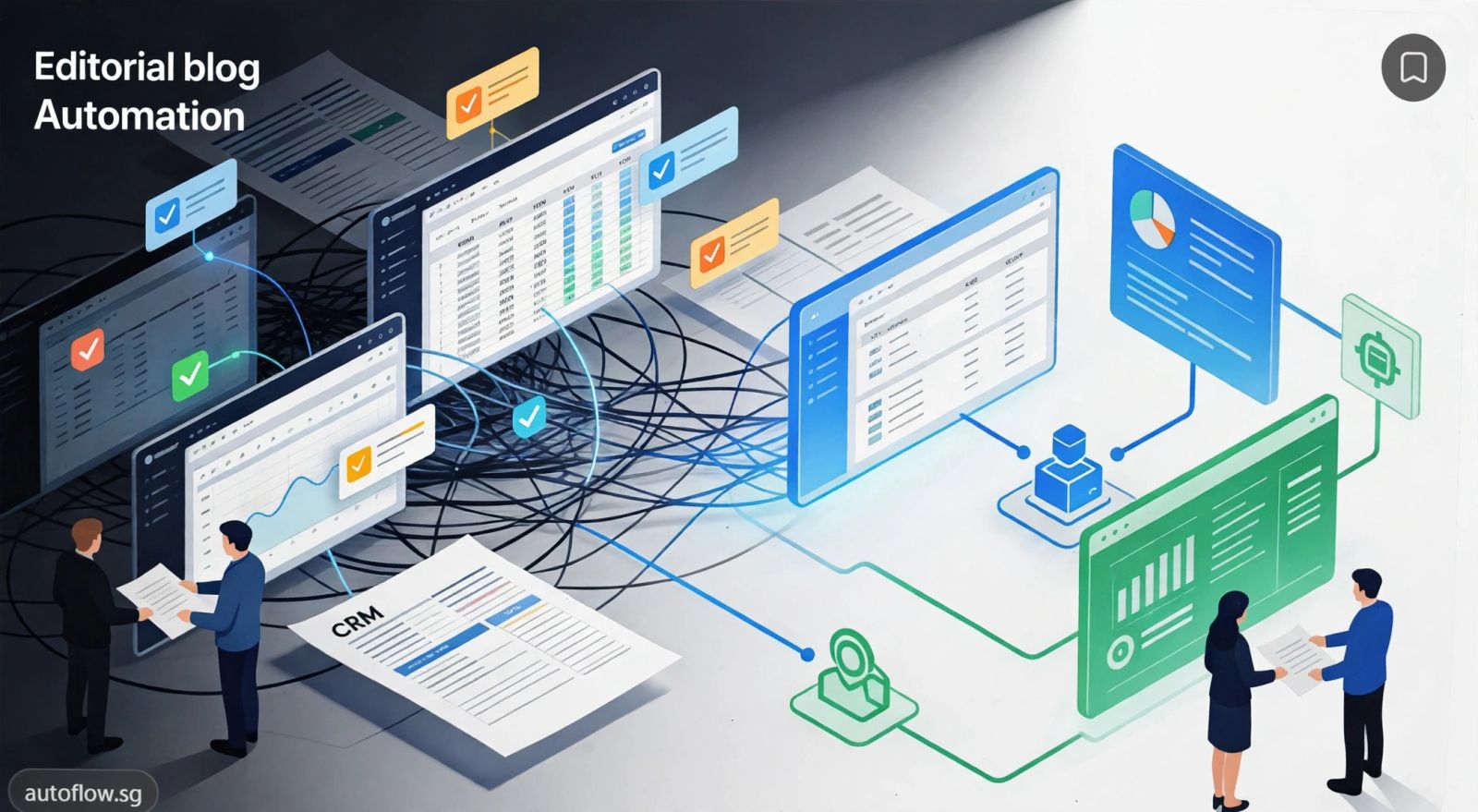
The cost of marketing technology extends beyond subscription fees. Businesses must also consider integration, implementation, data management, training, maintenance, and the time employees spend coordinating systems.
This broader operational burden is sometimes described as an integration tax.
For example, a company may purchase separate tools for content production, email marketing, lead management, and analytics. If the tools do not integrate effectively, employees may need to maintain duplicate records, troubleshoot workflows, and reconcile inconsistent reports.
The result can be a technology stack that is expensive to maintain without delivering the expected operational benefits.
AI marketing automation may help reduce some of this friction by connecting activities and automating repeatable processes. However, AI does not eliminate integration challenges. Poor-quality data, incompatible systems, unclear workflows, and inadequate governance can still undermine performance.
Before investing in another platform, businesses should evaluate whether the technology solves a real problem, works with their existing systems, and supports a measurable business objective.
Ready-to-Use AI Platforms vs. Custom AI Workflows
Businesses evaluating AI marketing automation often need to decide between using existing platforms and developing custom AI workflows.
Ready-to-use platforms can be a practical option for companies that want to introduce AI capabilities without building everything internally. Depending on the product, these tools may provide content assistance, campaign automation, reporting, customer segmentation, or workflow integrations.
Custom AI workflows can offer greater flexibility when a business has specialized processes, unique data requirements, or complex operational needs. However, customization may also introduce additional development costs, maintenance requirements, security considerations, and implementation time.
The right choice depends on the organization's size, existing technology, internal expertise, budget, and desired outcomes.
A business does not necessarily need a large collection of AI tools to improve marketing performance. In many cases, improving a few high-value workflows can be more useful than introducing multiple platforms without a clear plan.
The focus should remain on solving business problems rather than adopting technology simply because it is available.
How to Evaluate AI Marketing Automation Platforms
Selecting an AI marketing automation platform requires more than comparing feature lists. Businesses should consider how the technology will operate within their existing marketing processes and whether it can support their long-term objectives.
Integration and Compatibility
Review how the platform connects with existing CRM systems, marketing software, content platforms, analytics tools, and data sources.
Determine whether integrations are native, require additional services, or depend on custom development. Understand how information moves between systems and what happens when a workflow fails.
A platform that fits the current technology environment may be more valuable than one with an extensive feature set but complicated implementation requirements.
Data Security and Privacy
AI marketing workflows may involve customer information, lead records, campaign data, and internal business documents. Organizations should understand how providers store, process, protect, and use that information.
Review access controls, data retention practices, contractual terms, and whether submitted information may be used to train models. Sensitive information should only be processed through systems approved for that purpose.
Security should be part of the evaluation from the beginning rather than an issue addressed after implementation.
Human Oversight and Governance
Automation should not remove accountability from marketing decisions. Businesses need clear processes for reviewing content, approving external communications, handling exceptions, and correcting errors.
A human-supervised approach defines which tasks AI can support independently, which require approval, and which must remain under direct human control.
This is especially important for public-facing content, customer communications, factual claims, and activities that could affect brand reputation.
Implementation Costs and Return on Investment
Evaluate the full cost of implementation, including subscriptions, integration, training, maintenance, and internal resources.
Then compare those costs with measurable outcomes. Relevant indicators may include time saved on repetitive tasks, campaign production time, lead response time, qualified pipeline contribution, conversion rates, and reporting efficiency.
Establish a baseline before introducing automation so that performance can be evaluated meaningfully. Avoid assuming that every improvement is caused by AI without considering other factors that may have influenced the results.
Choosing an AI Marketing Approach That Supports Growth
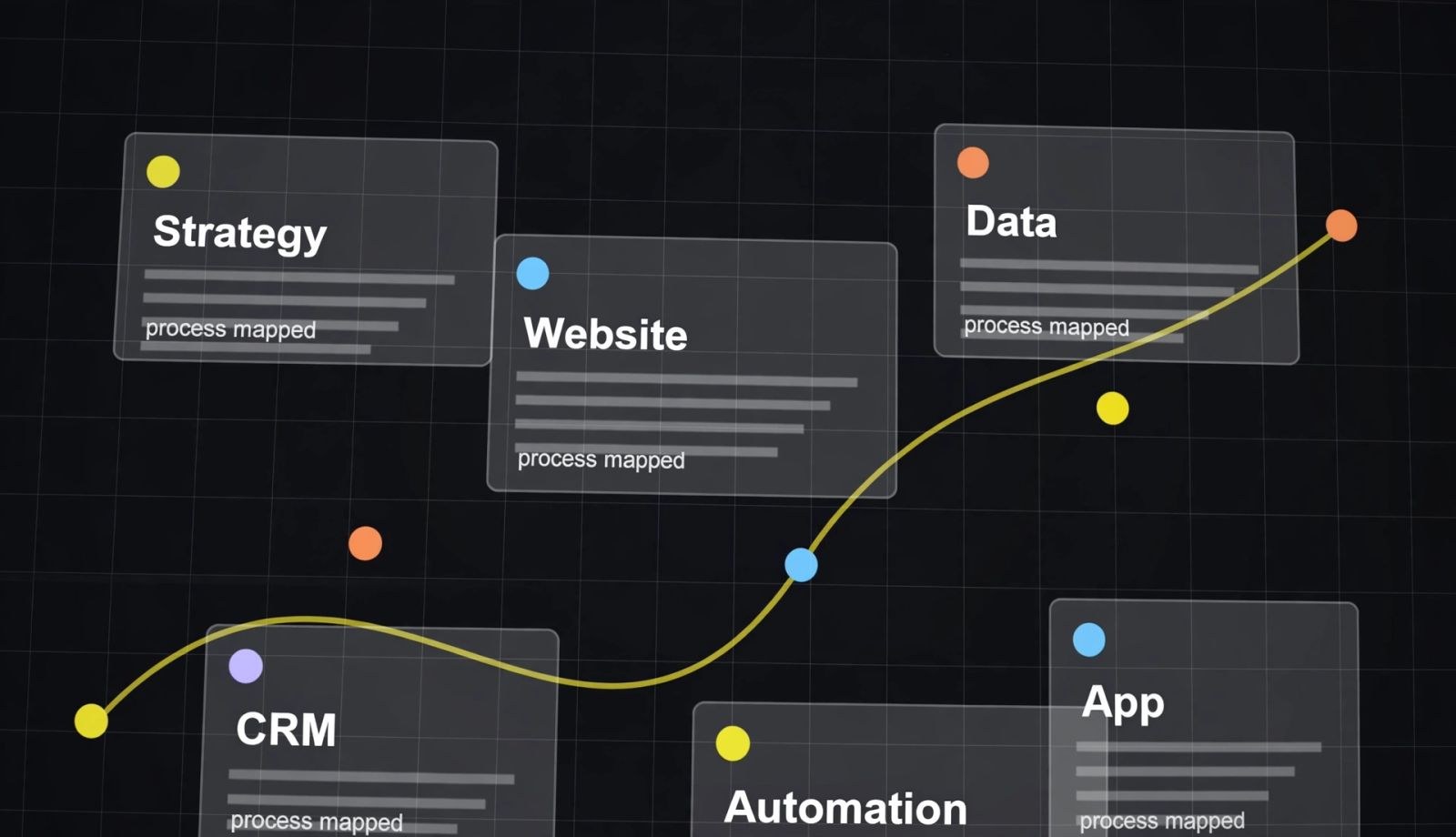
The most effective marketing technology strategy starts with business objectives rather than a list of tools.
B2B organizations should understand their target audience, positioning, pipeline goals, content requirements, and sales process before deciding which activities to automate. This creates a foundation for identifying where technology can make the greatest difference.
A company experiencing inconsistent content production may benefit from a structured content workflow. A team struggling with lead follow-up may need better CRM processes and communication automation. An organization with fragmented campaign reporting may need improved data integration before introducing advanced AI analysis.
The sequence matters because automation can amplify existing processes, including inefficient ones. Automating a poorly defined workflow may make it faster without making it more effective.
This is where strategic direction becomes important. Marketing leaders must connect technology decisions to positioning, customer needs, revenue objectives, and the resources available to execute the plan.
ProGrowth brings together fractional CMO-level strategy and AI-native execution to help businesses align marketing priorities with practical implementation. The goal is to create a more coordinated growth system in which strategy guides execution, technology supports the work, and people remain responsible for important decisions.
When Does a Traditional Martech Stack Still Make Sense?
Traditional marketing technology remains valuable. Established platforms can provide reliable CRM management, email distribution, analytics, advertising management, and content publishing capabilities.
For businesses with straightforward requirements, a small and well-integrated set of tools may be sufficient. Introducing additional AI platforms may create unnecessary complexity if the existing systems already meet the company's needs.
AI marketing automation is most useful when it addresses a specific operational challenge, improves coordination, or helps a team achieve a meaningful outcome. It should complement effective tools rather than replace them without justification.
The decision is therefore not simply between traditional martech and AI. It is about choosing the right combination of technology, workflows, and human expertise for the business.
Frequently Asked Questions
What is AI marketing automation?
AI marketing automation uses artificial intelligence alongside automated workflows to support marketing tasks such as content development, audience segmentation, lead nurturing, campaign coordination, and performance analysis. It helps teams reduce repetitive work while retaining human oversight for strategic and important decisions.
How is AI marketing automation different from traditional marketing automation?
Traditional marketing automation generally follows predefined rules and triggers, such as sending an email after a form submission. AI marketing automation can add capabilities such as content generation, pattern analysis, summarization, and context-based recommendations. The exact capabilities depend on the platform and its implementation.
Can AI marketing automation replace a traditional martech stack?
Not necessarily. Many businesses still need CRM systems, analytics platforms, email software, and other marketing tools. AI can connect or enhance these systems, but the best approach depends on existing infrastructure, business requirements, and the workflows that need improvement.
Is AI marketing automation suitable for small and mid-sized B2B businesses?
It can be, particularly when businesses begin with a clearly defined problem and select tools that match their resources. Starting with a small number of high-value workflows can make implementation easier to manage and help demonstrate whether the investment is worthwhile.
How can businesses measure the ROI of AI marketing automation?
Businesses can track operational measures such as time saved, content production speed, campaign turnaround time, lead response time, and reporting efficiency. They should also evaluate business outcomes, including qualified leads, conversion rates, and pipeline contribution, using a baseline established before implementation.
Why is human oversight important in AI marketing?
Human oversight helps ensure that marketing content is accurate, relevant, consistent with brand positioning, and appropriate for the intended audience. People remain responsible for strategic decisions, sensitive communications, approval processes, and evaluating AI-generated recommendations.
Conclusion: Build a More Connected Marketing Growth Engine
The difference between AI marketing automation and a traditional martech stack is not simply about using newer technology. It is about how effectively a business connects its tools, people, workflows, and growth objectives.
Traditional marketing platforms remain essential for many organizations. AI can make them more useful by supporting execution, reducing repetitive work, and helping teams interpret performance data. However, technology delivers value only when it supports a clear strategy and is implemented with appropriate oversight.
For B2B businesses, the opportunity is to move beyond managing disconnected marketing activities and build a coordinated system that supports sustainable growth.
ProGrowth combines fractional CMO-level strategic direction with AI-native marketing execution to help businesses connect their marketing priorities with the work required to move them forward.
Ready to rethink your marketing operations?
Book a demo with ProGrowth to explore how a strategy-led, AI-native approach can support your business growth.
Never Miss Our Latest Insights
Get exclusive B2B marketing strategies, AI automation tips, and growth tactics delivered straight to your inbox every week.
We respect your privacy. Unsubscribe at any time.